The Incentive Full Stack
Inside Polymarket’s growth orchestra: product pull, liquidity, referrals, rebates, and retention.
Polymarket’s prediction market PMF is the visible story.
But who gets paid to make truth liquid? What behavior gets rewarded? Does it compound?
This post originally was a series of tweets last week I decided to pull together in one post. If I missed something or got it wrong, let me know on 𝕏.
Polymarket is orchestrating incentives like a symphony:
- 2022: UMA and USDC rewards paid betting liquidity into existence (link1, link2)
- 2025: Dub.co signup affiliate links: $0.01/click + $10 first deposit (link)
- 2026: Native fee-share referrals: 30% from your referrals, 10% from theirs, with a 180-day boosted fee-share window (link)
- 2026: Maker rebates that recycle fees to makers (link)
- 2026: Taker rebates that reward repeat trading (link)
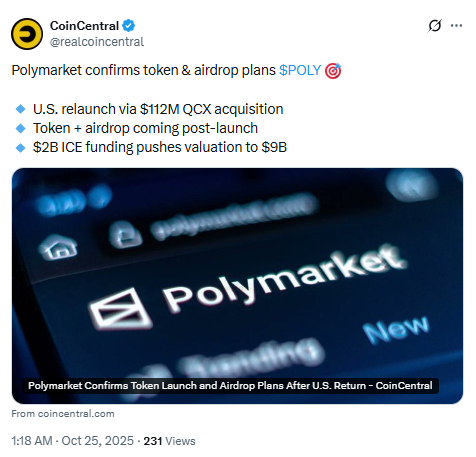
- 2025/26: token airdrop buzz (link)
Each instrument trains a different behavior: show up, deposit, trade, provide liquidity, return, or farm.
Referral Mechanics
Is the first deposit a user, or something else?
Partners optimize for the metric they are paid on. That is one reason why Polymarket’s multiple prongs are interesting.
The Dub.co affiliate program rewards arrival:
- $0.01/click
- $10 first deposit
But Polymarket’s native program rewards trading fee flow:
- 30% from your referrals
- 10% from the people they refer
- 180-day boosted fee-share window
That native layer rewards bringing users who can bring more users that stay a while. Not just a signup, but rather a distribution node.
And that is before liquidity rewards, maker/taker rebates and airdrop buzz enter the room.
Getting users is one game. Getting the right users to return is a little bit of science and magic.
Polymarket’s referral design already appears to be changing, which is the point: incentive systems are iterative.
Product Flywheel
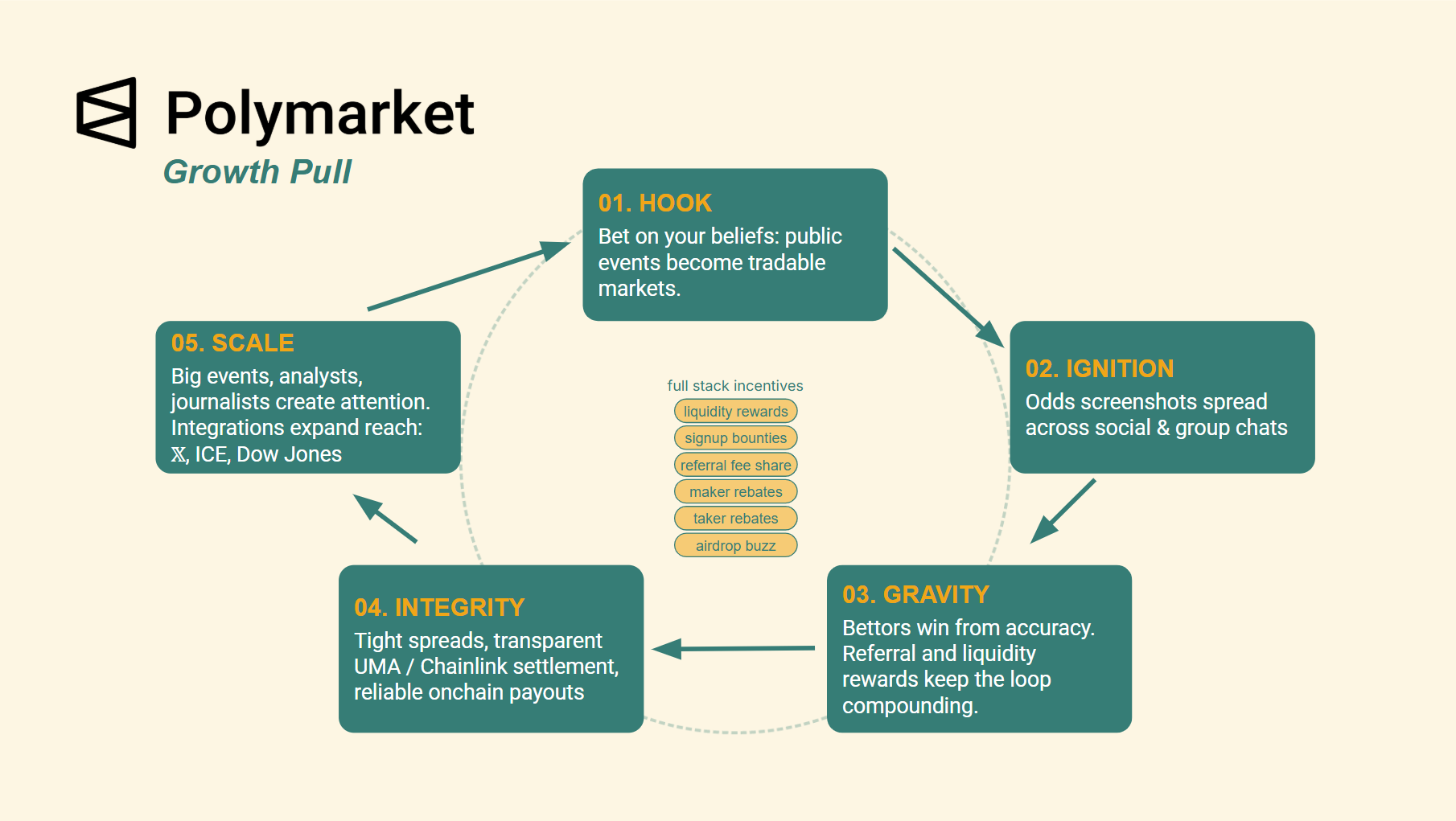
Polymarket has a zeitgeist product flywheel built in. The ultimate internet native growth loop.
- Hook pulls you in.
- Ignition spreads it.
- Gravity keeps you.
- Integrity earns trust.
- Scale takes it everywhere.
A major event becomes a market--> The market produces odds--> The odds become a screenshot --> The screenshot becomes an argument --> The argument brings traders--> The traders move the odds--> Then the new odds become the next screenshot.
That is the product loop.
- CFTC settlement.
- Thiel funding halo.
- Election odds beating pundits.
- FBI raid.
- Maduro bet.
- Wall Street integrations.
The headline machine becomes the headline while the incentive stack turns that attention into a set of behaviors.
Retention
The Polymarket question I keep coming back to is retention and reactivation.
@hildobby’s Polymarket retention cohorts (Dune) give a few clues measuring active-address return behavior. This is not new-user retention. It measures whether active maker/taker addresses came back in later months.
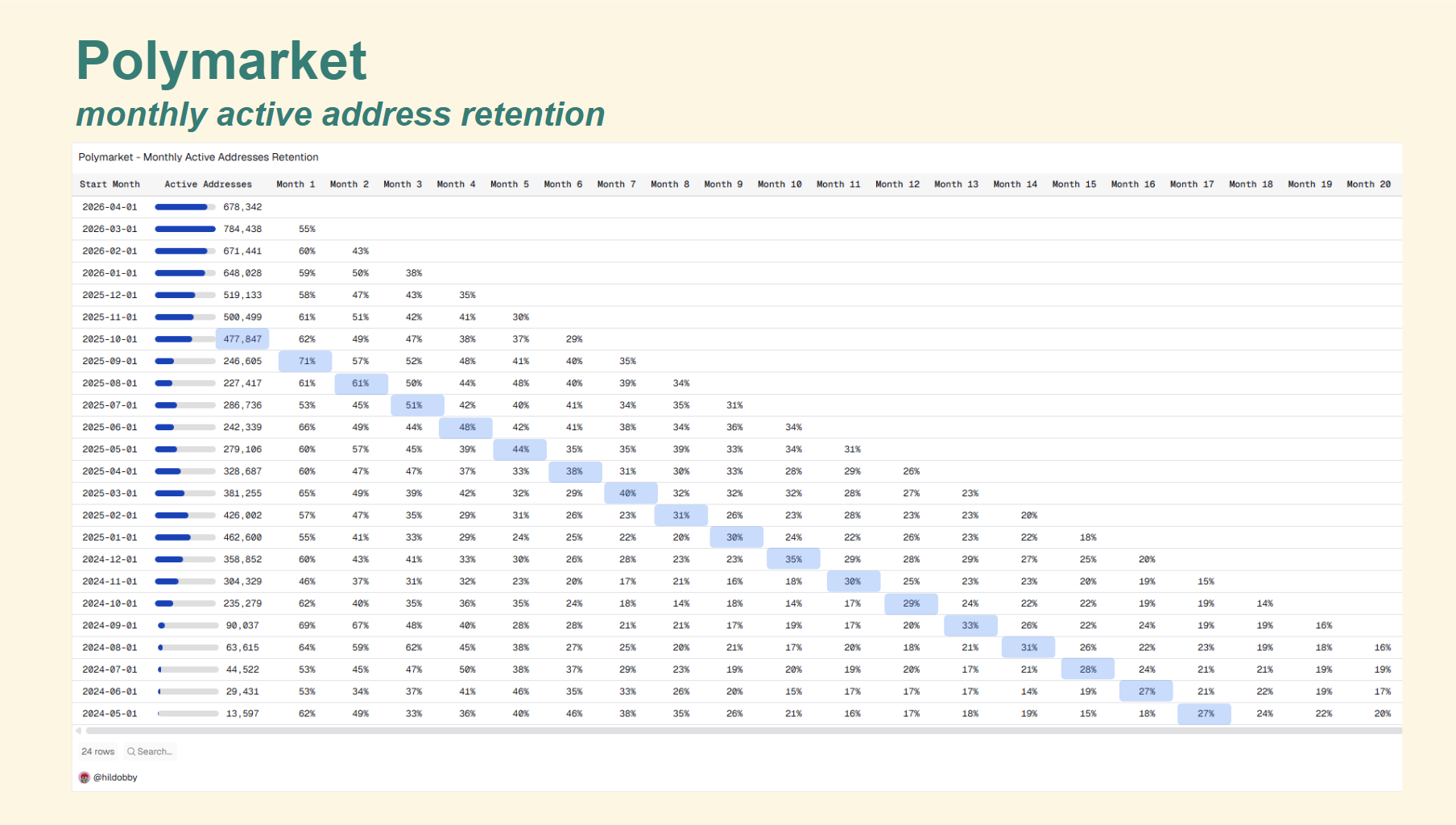
In Sep-Oct 2025, multiple older cohorts woke back up:
- Aug 2024: 18% → 31%
- Oct 2024: 17% → 29%
- Nov 2024: 18% → 30%
- Dec 2024: 23% → 35%
- Jan 2025: 20% → 30%
- Mar 2025: 29% → 40%
That looks less like one mystery cohort and more like a platform-wide reactivation wave.
What pulled them back?
- ICE investment?
- U.S. relaunch buzz?
- Airdrop tease?
- Referral incentives?
- Product changes?
- Something else?
Polymarket’s growth looks less like one magic lever and more like a stacked incentive system.
Only Polymarket knows the full recipe. But the breadcrumb timing helps tell a story.
On User Depth and Orchestration
Looking at the results, it becomes clear that these are less one-off growth hacks and more a musical score.
@etheroin drops a useful breakdown:
- 2.69M total users
- 910K+ wallets traded under $100
- 35K users crossed $100K volume
- 5,798 wallets crossed $1M volume
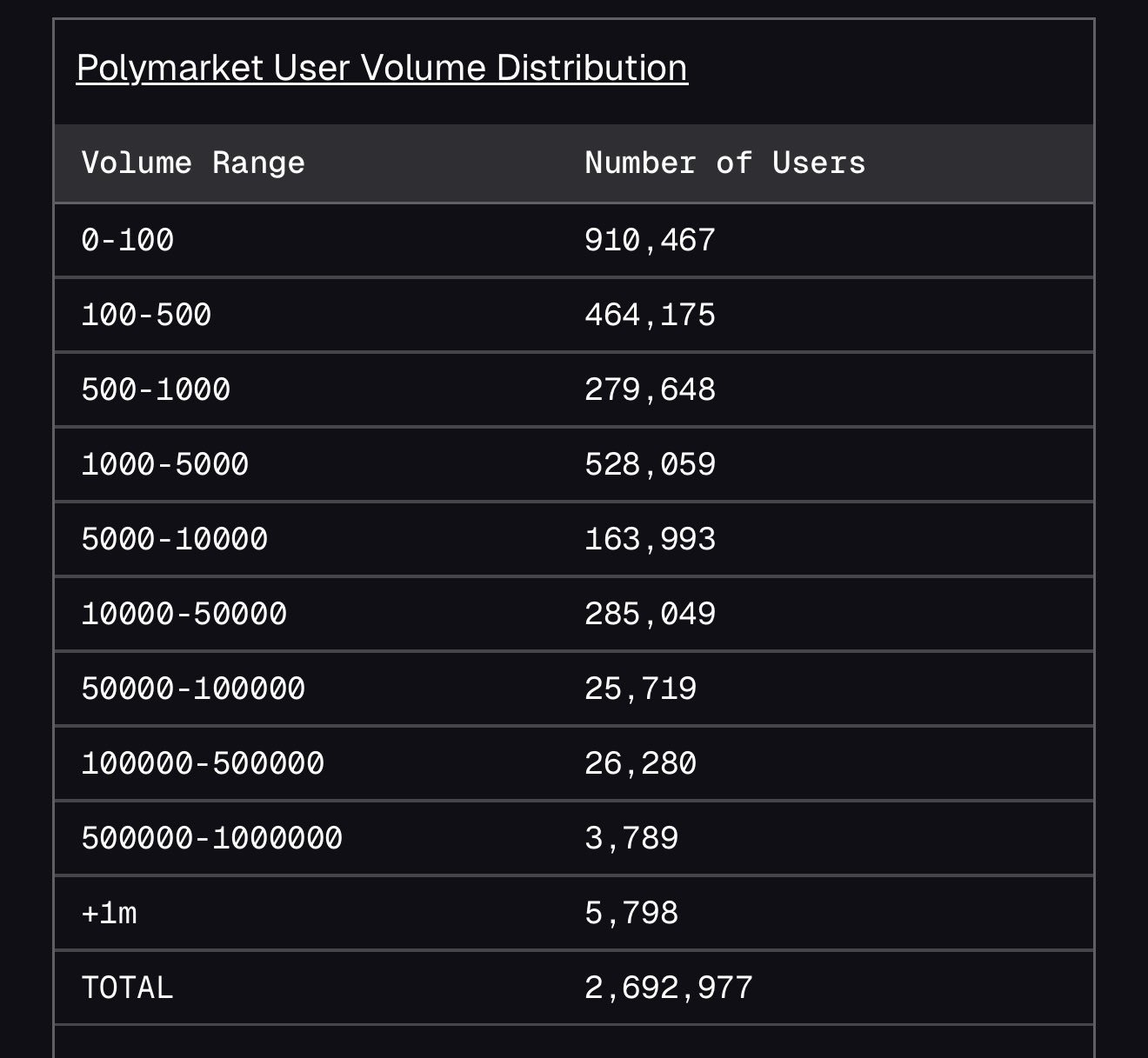
Scans like a wide but shallow pool. A lot of people touched the product, only about 1.4% crossed $100K in volume.
That is where the next incentive layer gets interesting. Referrals can bring users in. Fee-share can reward trading behavior. Maker and taker rebates can deepen liquidity and activity. Airdrop buzz can pull dormant users back and give them a reason to learn the system.
Strings, horns, bass, percussion. Different instruments. One score. This is where Polymarkets’ “growth pull” compounds yet again.
Builder Scorecard
Judge the incentive by the user it keeps.
Most growth programs measure the easiest thing to fake. They count arrival but they miss return behavior.
Polymarket’s stack spans affiliate clicks, first deposits, fee-share referrals, liquidity rewards, maker rebates, taker rebates, airdrop buzz.
Here is a scorecard for growth teams:
- Did the user return?
- Did they generate fees?
- Did they trade or use the product more than once?
- Did they show up again after the event ended?
- Did the partner bring the right user segment?
- Did the program create reactivation?
- Did the incentive create farming?
- What are the LTV and CAC per cohort?
Clicks tease intent. First deposits signal commitment. Maker and taker rebates add depth. Airdrop buzz makes the surface harder to read.
But the score is never finished. Each cohort asks again: who came back? why they came back? and what they were worth?
I am opening 1 advisory slot this summer for teams building growth systems that need the whole orchestra to hit on time.
If this problem has started showing up in your dreams, the answer is probably buried in the options. DM me on 𝕏. Let’s excavate it.